
A Strong Start Begins with the Spine
Your baby’s spine is more than a column of small bones. It is the central support system of the body, protecting the spinal cord, which carries messages between the brain and the rest of the body. It supports posture, allows movement, and forms the foundation for sitting, standing, crawling, and walking. The first year of life is especially important because the spine changes rapidly in response to movement and muscle development.
How an Infant’s Spine Develops
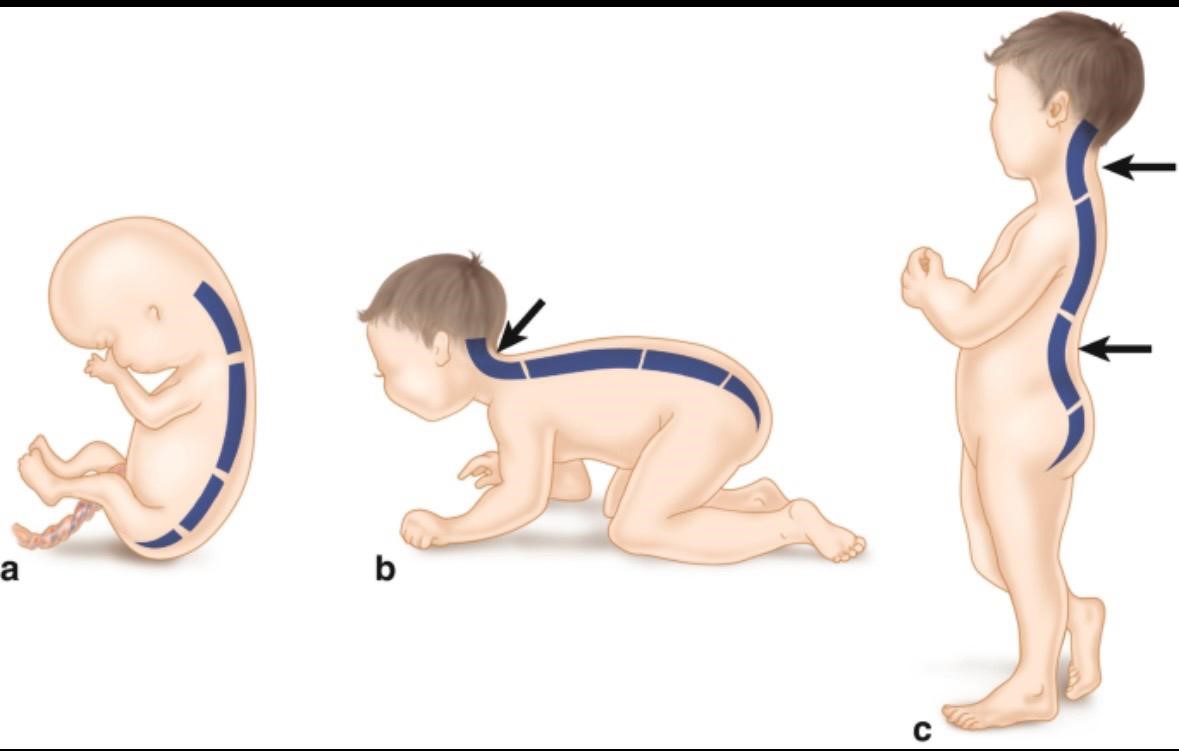
At birth, a baby’s spine has a single soft C-shaped curve from their curled position in the womb. The bones are flexible, and the supporting muscles are still developing. During the first year, two important curves gradually form as your baby becomes stronger and more active.
1. Neck Curve (Cervical Curve) – Around 2–4 Months
When babies begin lifting their head during tummy time, the neck and upper back muscles strengthen. Repeated head lifting forms the forward curve in the neck. This curve supports head control, visual exploration, feeding coordination, and early rolling skills. Strong head control is the first major building block for future movement milestones.
2. Lower Back Curve (Lumbar Curve) – Around 6–12 Months
As babies start sitting independently, crawling, pulling to stand, cruising along furniture, and eventually walking, the lower back develops its natural inward curve. This curve is essential for upright posture, balance, shock absorption, and safe walking. Each milestone builds on the previous one, showing how movement directly shapes spinal development. Movement truly drives development. Every wiggle, roll, pivot, push-up, crawl, and pull-to-stand strengthens muscles that support the spine. Regular floor play allows babies to practice weight shifting, trunk control, and coordination in a safe and natural way.
Common Concerns Parents Have
Parents often worry about whether their baby’s spine is developing normally. Many concerns are common and manageable with early guidance and simple daily habits.
1. “My baby hates tummy time.”
This is very common. Tummy time feels challenging because babies are learning to activate new muscles. Start with short sessions of one to two minutes several times daily. Get down to your baby’s level, make eye contact, sing, or use a mirror or favorite toy for motivation. A small rolled towel under the chest can improve comfort. Consistency is more important than duration.
2. Flat Head (Positional Flattening)
Because babies sleep on their backs for safety, some may develop flattening on one side of the head. To reduce this risk, encourage supervised tummy time daily, alternate the direction your baby faces in the crib, vary feeding and carrying positions, and limit long periods in car seats or swings when not traveling. If your baby consistently turns their head to one side, seek early professional advice.
3. Delayed Sitting or Crawling
All babies develop at their own pace, but certain signs may require assessment. These include very stiff or very floppy muscles, persistent head tilt, using one side of the body more than the other, or not attempting to sit by around nine months. Early support and guided exercises can significantly improve outcomes.
4. Sitting Too Early
Propping babies with pillows or placing them in seats before they can sit independently may place pressure on a spine that is not yet ready. Natural floor movement allows gradual muscle strengthening and proper curve formation. Allow your baby to reach milestones through active exploration rather than positioning devices.
The Big Picture
Your baby’s spine is building the foundation for lifelong posture, coordination, sports participation, and daily activity. Small, consistent habits create strong long-term outcomes. If you ever feel unsure, trust your instincts and seek advice early. Healthy movement begins from day one, and every small step counts.
References
American Academy of Pediatrics. (2022). Back to sleep, tummy to play. https://www.aap.org
Case-Smith, J., O’Brien, J. C., & Frolek Clark, G. (2020). Occupational therapy for children and adolescents (8th ed.). Elsevier.
Hockenberry, M. J., & Wilson, D. (2019). Wong’s nursing care of infants and children (11th ed.). Elsevier.
Kendall, F. P., McCreary, E. K., Provance, P. G., Rodgers, M. M., & Romani, W. A. (2014). Muscles: Testing and function with posture and pain (5th ed.). Lippincott Williams & Wilkins.
Sweeney, J. K., & Gutierrez, T. (2002). Musculoskeletal implications of preterm infant positioning in the NICU. Journal of Perinatal & Neonatal Nursing, 16(1), 58–70.
PT Philis Iguta
Chiropractic & Physiotherapy Health Centre
Leave a Reply