When people experience pain, stiffness, reduced movement, or physical discomfort, they often hear terms such as exercise, adjustment, and manipulation during discussions about chiropractic care and physiotherapy. Although these three approaches can sometimes be used as part of the same treatment plan, they are not the same thing. Each has a specific purpose, and understanding the difference can help you feel more confident about your care.
The main goal of these approaches is to help the body move better, function more effectively, and support a healthier and more active lifestyle. However, the most appropriate treatment depends on the individual, their condition, and their specific goals.
What Are Exercises?
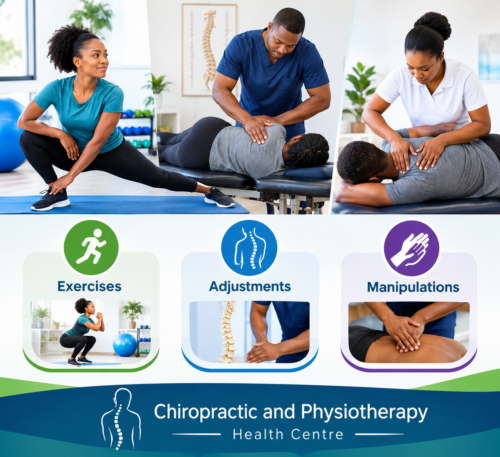
Exercise is one of the most important parts of maintaining a healthy and functional body. In physiotherapy and rehabilitation, exercises are carefully selected to address specific weaknesses, movement limitations, or physical goals.
Exercises can help improve muscle strength, flexibility, balance, coordination, endurance, and joint mobility. They may also help a person regain confidence in movement following an injury or period of reduced activity.
For example, someone experiencing lower-back stiffness may be given exercises designed to strengthen the muscles around the abdomen, hips, and back. Someone recovering from a knee injury may need exercises that gradually restore strength and stability. Stretching exercises may also be recommended when limited flexibility is affecting movement.
The important thing to remember is that exercise is not simply about working harder. The right exercise, performed correctly and at the appropriate level, is what matters. A physiotherapist can assess your condition and recommend exercises that suit your abilities and stage of recovery.
Regular exercise can also play an important role in preventing future problems. By maintaining strength, flexibility, and mobility, you can make everyday activities such as walking, lifting, bending, climbing stairs, and participating in sports easier and more comfortable.
What Are Adjustments?
An adjustment is a specific, controlled manual technique commonly associated with chiropractic care. It involves applying a carefully directed force to a joint or part of the musculoskeletal system with the aim of improving movement or joint function.
People may seek chiropractic adjustments when they experience stiffness or restricted movement in areas such as the back, neck, or other joints. Following an appropriate assessment, a qualified chiropractor may determine whether an adjustment is suitable.
The purpose is not simply to “put something back into place,” as people sometimes describe it. Rather, chiropractic care focuses on the relationship between movement, joint function, the musculoskeletal system, and the person’s overall physical condition.
Because the spine and joints are important structures, adjustments should be performed by appropriately trained and qualified professionals. A proper assessment is important before treatment so that the practitioner can understand the person’s symptoms, medical history, physical condition, and treatment needs.
What Are Manipulations?
Manipulation is another form of manual therapy involving controlled movement of a joint or body region. Depending on the technique, manipulation may involve a specific direction, speed, or range of movement.
Manipulative techniques are used by appropriately trained healthcare professionals in some circumstances to help improve joint mobility and manage certain musculoskeletal problems. They may be used as part of a broader treatment programme rather than as a stand-alone solution.
It is important to understand that manipulation is not appropriate for everyone. A qualified practitioner should first assess the individual and consider factors such as their symptoms, health history, physical condition, and any potential risks.
How Do They Work Together?
Imagine a person who has been experiencing lower-back stiffness and difficulty moving comfortably. A physiotherapist may recommend specific exercises to strengthen the muscles supporting the back and improve flexibility.
If appropriate, a chiropractor or other qualified practitioner may use an adjustment to address restricted joint movement. In certain situations, a trained practitioner may also consider an appropriate manipulation technique to help improve mobility.
These approaches can complement one another because they address different aspects of movement and function. However, treatment should always be individualised rather than automatically combining every technique.
For example, hands-on treatment may help improve movement in the short term, while exercises can help a person develop strength, control, and confidence over time. This is why rehabilitation often involves both professional treatment and active participation from the patient.
Is One Approach Better Than the Others?
Not necessarily. There is no single treatment that is suitable for everyone.
The best approach depends on several factors, including your age, symptoms, physical activity level, medical history, current mobility, previous injuries, and personal goals. Some people may benefit mainly from exercise and rehabilitation, while others may benefit from carefully selected manual techniques alongside exercise.
Your practitioner should explain the recommended treatment, why it may be appropriate, and what you can do at home to support your progress.
It is also important to remember that treatment should be comfortable and appropriately managed. If you experience unusual or worsening symptoms, you should inform your healthcare professional rather than continuing without guidance.
The Bottom Line
In simple terms, exercise helps the body become stronger, more flexible, and more capable; adjustments are controlled chiropractic techniques intended to improve joint movement and function; and manipulation involves controlled manual movement of joints or body regions to influence mobility.
These approaches can form part of a broader chiropractic or physiotherapy programme designed around your individual needs.
At a professional chiropractic and physiotherapy health centre, the focus should not simply be on treating a painful area. It should be on understanding why movement may be limited, what your body needs, and how to help you move safely and confidently.
Whether your goal is to recover from an injury, manage stiffness, improve mobility, return to sport, or maintain an active lifestyle, a personalised assessment is an important first step. With the right guidance, appropriate exercises, and carefully selected treatment techniques, you can take an active role in supporting your movement, physical function, and long-term wellbeing.
Leave a Reply