Strong bones; When was the last time you thought seriously about your bones, muscles, joints, tendons, and ligaments?
For many of us, the answer is probably: when something starts to hurt.
A painful back. A stiff knee. A shoulder that no longer moves the way it used to. Difficulty climbing stairs. A fall that takes longer to recover from. Or, sometimes, a fracture that comes unexpectedly.
We often associate bone and musculoskeletal health with ageing. We tell ourselves that these are concerns for “later in life.”
But here is an important question:
What if the health of your musculoskeletal system tomorrow is being influenced by what you do today?
Our musculoskeletal system is remarkable. Our bones provide structure and protection. Our muscles allow us to move and maintain stability. Our joints give us flexibility. Tendons and ligaments connect and support these structures, allowing the entire system to work together.
We rarely think about all of this when everything is working well.
We simply walk, climb stairs, carry groceries, exercise, sit at our desks, play with our children, travel, dance, or get out of bed in the morning.
It is only when movement becomes difficult that we truly appreciate how important mobility and strength are.
That is why musculoskeletal health should not be treated as something we address only when we become older or develop a problem.
It is something we build, maintain, and protect throughout our lives.
Move more—and move consistently
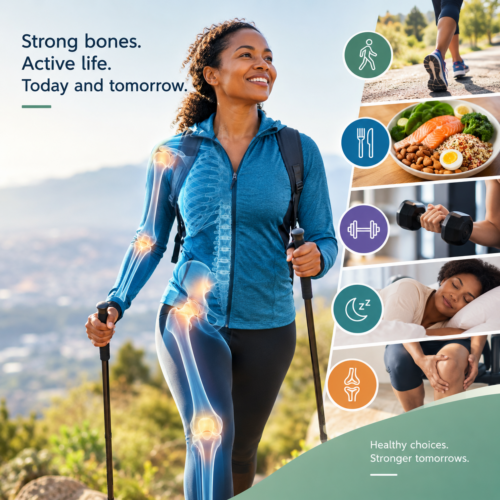
One of the most powerful things we can do for our musculoskeletal health is also one of the simplest: keep moving.
You don’t necessarily need an expensive gym membership or an elaborate exercise programme.
Walking regularly, taking the stairs, cycling, swimming, dancing, gardening, stretching, or participating in recreational activities can all help keep the body active.
For bone health, weight-bearing activities are particularly valuable. For muscles, resistance exercises can help build and maintain strength.
The key is consistency.
A single workout once a month is unlikely to make much difference. Small, sustainable habits repeated over time can.
Think of movement not as something you do only to “exercise,” but as an investment in your future ability to move independently.
Don’t underestimate muscle strength
When we talk about health, we often focus heavily on weight, blood pressure, cholesterol, or other numbers.
But strength matters too.
Muscle strength contributes to balance, posture, stability, mobility, and our ability to perform everyday activities.
As we get older, maintaining muscle becomes increasingly important because muscle mass and strength can decline with inactivity and ageing.
This is why strength training should not be viewed as something reserved for athletes or bodybuilders.
It can be as simple as exercises using your own body weight, resistance bands, light weights, or appropriately designed resistance programmes.
The goal isn’t necessarily to become stronger than everyone else.
The goal is to remain strong enough to live the life you want.
Feed your bones and muscles well
Exercise is only part of the picture.
Our bodies need the right nutritional building blocks to maintain healthy bones and muscles.
Adequate protein supports muscle maintenance and repair, while nutrients such as calcium and vitamin D play important roles in bone health.
A balanced diet that includes a variety of vegetables, fruits, whole grains, legumes, healthy fats, and appropriate sources of protein can provide much of what the body needs.
And this is where consistency matters again.
We don’t need to chase every new nutrition trend.
We need sustainable habits that we can maintain for years.
Your musculoskeletal health is being influenced by what you eat repeatedly—not by one “perfect” meal.
Listen when your body speaks
There is another important part of prevention that we sometimes overlook: paying attention to changes in our bodies.
Persistent pain shouldn’t automatically be dismissed as “just ageing.”
Neither should repeated falls, unexplained weakness, worsening stiffness, loss of balance, or a noticeable decline in mobility.
These changes may have many possible causes, and not every ache or pain is a sign of something serious. But persistent or concerning symptoms deserve appropriate attention rather than being ignored.
Early assessment can sometimes identify problems before they significantly affect mobility, independence, or quality of life.
Prevention is not about being afraid of ageing. It is about being proactive about how we age.
Your future self is depending on today’s habits
We often plan for our financial future.
We save money. We invest. We buy insurance. We think about retirement.
But how often do we think about investing in our physical capacity for the future?
What good is a long retirement if we cannot comfortably walk, climb stairs, travel, lift, reach, or participate in the activities we enjoy?
Healthy ageing is not simply about adding years to life.
It is also about adding quality, function, independence, and confidence to those years.
And that starts much earlier than many people think.
Whether you are 25, 45, 65, or 75, there is value in asking what you can do today to support your musculoskeletal health.
Maybe it is taking a daily walk.
Maybe it is starting a safe strength-training programme.
Maybe it is improving your nutrition.
Maybe it is addressing persistent pain instead of ignoring it.
Maybe it is simply getting up from your desk more often and moving throughout the day.
It doesn’t have to be dramatic.
Small actions, consistently repeated, can become powerful habits.
Let’s change the conversation
We shouldn’t wait for a fracture, severe joint pain, significant weakness, or loss of mobility before we start talking about musculoskeletal health.
The conversation needs to begin much earlier.
Strong bones are not simply about getting older. Healthy joints are not simply about avoiding pain. Strong muscles are not simply about looking fit.
They are about function.
They are about being able to get up, move freely, work, play, travel, care for others, participate in your community, and maintain independence.
And ultimately, they are about preserving the ability to live the life you want for as long as possible.
So perhaps the better question isn’t:
“How old am I?”
Perhaps it is:
“What am I doing today to make sure my body can support the life I want to live tomorrow?”
I’d love to hear your thoughts:
What is one thing you are doing today to protect your bones, muscles, and joints for the future?
Leave a Reply