
Whiplash is often misunderstood as “just a sore neck after an accident.” But in musculoskeletal practice, the effects can be far more complex. 🚗💥
I have seen patients walk into the clinic days—or even weeks—after a minor car accident, surprised that their neck pain, headaches, dizziness, or shoulder stiffness are getting worse rather than better.
That is the tricky thing about whiplash.
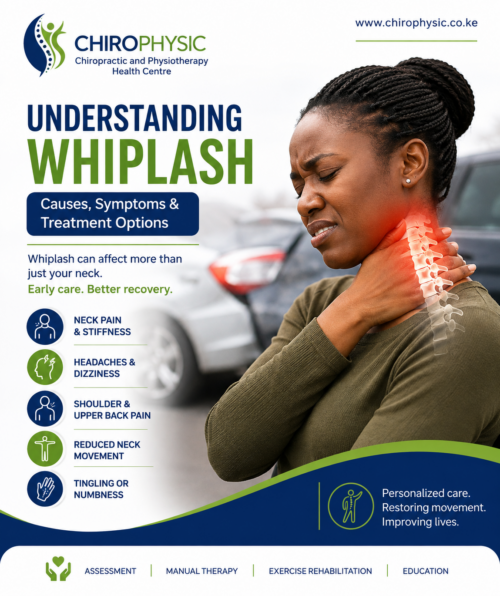
Whiplash occurs when the head is suddenly and forcefully thrown backwards and forwards, commonly during rear-end motor vehicle collisions. This rapid movement can strain muscles, ligaments, joints, nerves, and other soft tissues around the neck and upper back.
The symptoms can vary significantly from person to person. Some of the most common include:
🔹 Neck pain and stiffness
🔹 Headaches, especially at the base of the skull
🔹 Shoulder and upper back pain
🔹 Reduced neck movement
🔹 Dizziness or fatigue
🔹 Tingling or numbness in the arms
🔹 Difficulty concentrating in some cases
One important lesson I have learned from working with musculoskeletal conditions is that the severity of the accident does not always reflect the severity of the symptoms. Even a low-speed collision can cause significant soft tissue dysfunction.
Early assessment is essential. Ignoring persistent symptoms and hoping they will simply disappear may contribute to chronic pain, muscle weakness, poor posture, and restricted mobility.
Treatment should always be based on an individual’s assessment and clinical findings. Depending on the condition, management may include physiotherapy, gentle mobility exercises, manual therapy, posture correction, soft tissue techniques, strengthening, and gradual return to normal activities.
💪
The goal is not simply to eliminate pain—it is to restore movement, confidence, strength, and function.
One thing I always emphasize is this: pain after an accident should never be dismissed simply because there are no visible injuries.
Your body may be communicating something that deserves attention.
Whether you work in healthcare, occupational safety, insurance, human resources, or transport, understanding whiplash can help promote earlier intervention and better recovery outcomes.
Have you or someone you know experienced persistent neck pain after a road accident? What was the recovery journey like?
💬 Share your experience in the comments. Let’s create more awareness around musculoskeletal health and recovery.
Leave a Reply