
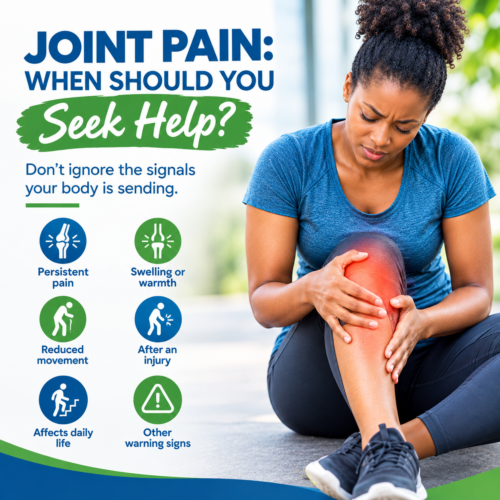
Joint pain is one of those symptoms many people gradually learn to live with.
“I probably overdid it.”
“It will settle.”
“Maybe it’s just part of getting older.”
These are common explanations, and sometimes rest, activity modification, or simple self-care may be enough for minor, short-term discomfort. However, when joint pain persists, keeps returning, or begins affecting movement and daily activities, it deserves closer attention.
Working in the musculoskeletal field, one lesson that continues to stand out is that joint pain is a symptom, not a diagnosis.
Pain may be associated with an injury, repetitive strain, inflammation, reduced joint mobility, muscle weakness, changes within the joint, or problems involving the muscles, tendons, ligaments, or other surrounding structures.
That is why an important question during assessment is not simply:
“Where does it hurt?”
It is also:
“Why is it hurting?”
Understanding the possible contributors can help determine the most appropriate approach to management.
🚩 1. When the pain persists
Occasional discomfort after unusual activity may settle with appropriate rest and recovery.
But if joint pain continues for days or weeks, repeatedly returns, or gradually becomes more intense, it is worth having it assessed.
Simply taking pain medication, resting repeatedly, or pushing through the discomfort may provide temporary relief without addressing the factors contributing to the problem.
🚩 2. When there is swelling, warmth or redness
A joint that becomes visibly swollen, warm, red, or unusually tender should not automatically be ignored.
These symptoms can occur following an injury or with inflammation and may require professional assessment, particularly when they persist or are accompanied by significant pain or reduced movement.
🚩 3. When movement becomes restricted
Joint pain often becomes more noticeable when it starts changing the way you move.
Are you struggling to fully bend your knee?
Is raising your shoulder becoming difficult?
Does your ankle hurt when you put weight on it?
Have you noticed that your neck no longer turns as freely as it used to?
Reduced movement can affect mobility, independence, exercise, and work. A musculoskeletal assessment can help identify whether factors such as stiffness, weakness, pain, or movement patterns are contributing.
🚩 4. When pain follows an injury
A fall, sudden twist, collision, sports injury, or awkward movement can affect a joint and the tissues around it.
If the injury is followed by significant pain, swelling, instability, weakness, or difficulty using the affected limb, professional assessment is important.
Not every injury looks serious from the outside, and persistent symptoms should not simply be ignored because there is no obvious bruising.
🚩 5. When pain starts affecting everyday life
This is one of the warning signs that is frequently underestimated.
Joint pain becomes more significant when it begins interfering with:
🚶 Walking
😴 Sleep
💼 Work
🏋️ Exercise
🪜 Climbing stairs
🏠 Everyday activities
When pain starts changing what you can comfortably do, it is worth seeking guidance rather than waiting for it to become severe.
🚩 6. When other warning signs appear
Some symptoms require prompt medical evaluation.
These may include fever, significant redness or swelling, severe or rapidly worsening pain, sudden weakness, unexplained weight loss, or a joint that becomes extremely painful and difficult to move.
The appropriate response depends on the symptoms and their underlying cause.
💡 What happens during a musculoskeletal assessment?
A good assessment goes beyond identifying the painful joint.
The clinician may look at movement patterns, joint mobility, muscle strength, flexibility, posture, previous injuries, work demands, exercise habits, and other factors that could be contributing to the symptoms.
Depending on the findings, management may involve physiotherapy, therapeutic exercise, manual therapy, education, activity modification, or referral for further medical investigation when necessary.
One lesson that continues to stand out in musculoskeletal practice is this:
You do not always have to wait for pain to become severe before seeking help.
Early assessment can help identify contributing factors, preserve function, and provide a clearer direction for recovery.
Joint pain should not automatically be dismissed as “normal” or something you simply have to live with.
Your body communicates through symptoms. Sometimes, that discomfort is a signal worth listening to. 👂🦴
The question is not always, “Can I tolerate the pain?”
Sometimes the better question is:
“What is my body trying to tell me?”
💬 Have you ever ignored joint pain because you thought it would eventually go away? Share your experience in the comments.
Leave a Reply